
Manual · Sticky traps
Placing yellow sticky traps
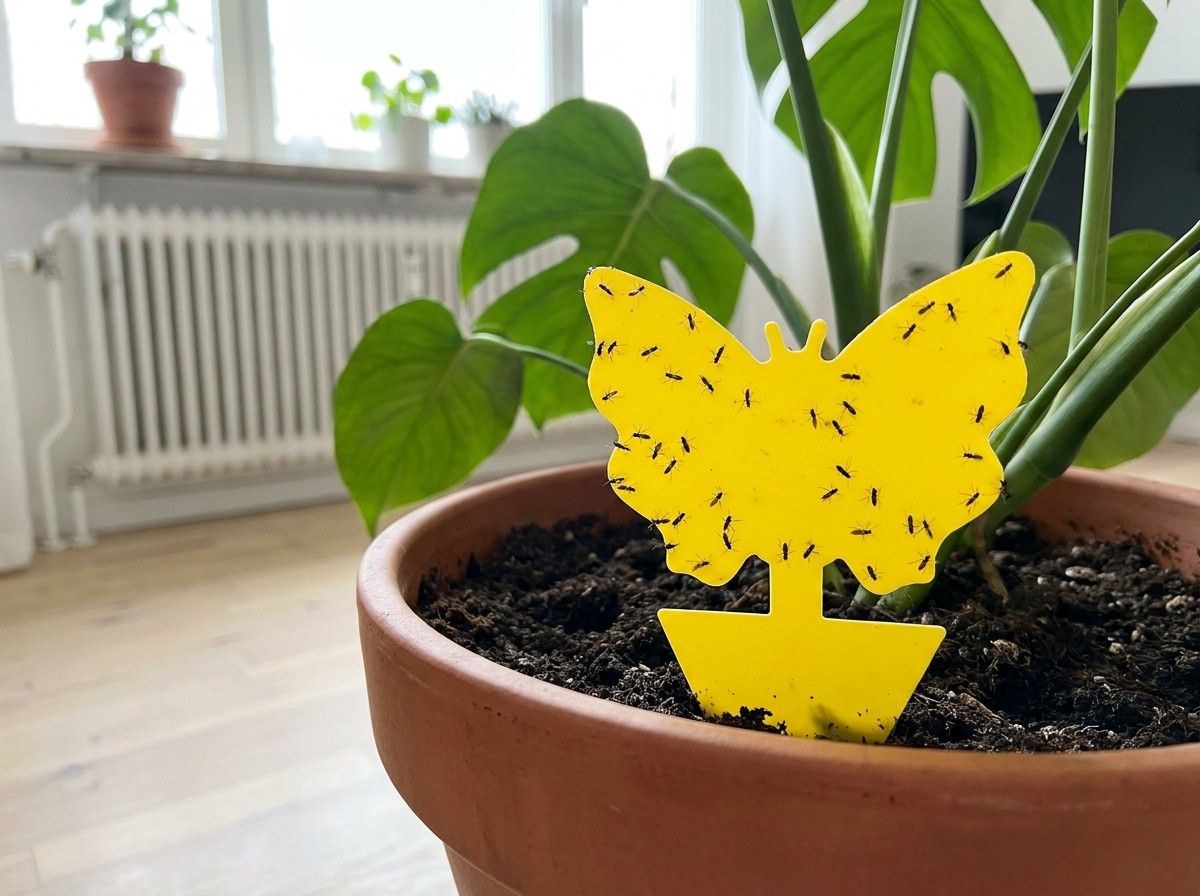
Yellow sticky traps catch the adult fungus gnats before they can lay new eggs. You see results straight away, and together with nematodes you break the pest’s life cycle.
Good to know
The sticky traps are water-resistant and keep their glue layer, even while you water your plants. They have an unlimited shelf life, so any unused traps can simply be kept for later.
Step by step
How to place the sticky traps
Remove the protective foil
- Pull the foil from the bottom upwards, so your fingers don’t stick to the glue layer
- Do this on both the front and back
- Touch the sticky side as little as possible
Place it in the potting soil
- Push the trap upright into the (potting) soil
- Be careful with small plants so you don’t damage the roots
- Use one trap per plant
Keep it close to the plant
- Place the trap where the gnats are flying around
- The yellow colour attracts the fungus gnats — once they land, they stick
Replace when full
- Is a trap full, or would you rather not look at the gnats? Simply replace it with a new one
- After a few days you’ll see the traps catching more and more fungus gnats
Combine with nematodes
- Sticky traps catch the adult gnats, nematodes deal with the larvae in the potting soil
- Together the fungus gnats usually disappear within a few weeks
Tip
Don’t worry when watering: the traps are water-resistant and keep on sticking.
Safe & natural
No poison, no smell
Sticky traps work purely on colour and glue. No chemicals, safe for children, pets and your plants.
Storage advice
Unlimited shelf life
Keep unused traps dry in their packaging. They last indefinitely, so you can use them exactly when you need them.
Ready to order?
Yellow sticky traps & nematodes
Tackle fungus gnats in two ways: traps for the adults, nematodes for the larvae — biological and safe.
View in the shop →